
Revista Andina de Educación 9(1) (2026) 6155
Flipped Classroom and Active Strategies: Students’ Perceptions of Engagement in Numerical Analysis
Sala de aula invertida e estratégias ativas: Percepções dos estudantes sobre o engajamento em cálculo numérico
Leandro Blassa 
 , Angélica Cristina Rhodenb
a Universidade Federal do Pampa, Bagé, RS, Brasil
b Universidade Estadual do Centro Oeste (Unicentro), Departamento de Administração, Guarapuava, Paraná, Brasil.
Received December 19, 2025. Accepted April 1, 2026. Published: April 22, 2026
https://doi.org/10.32719/26312816.6155
© 2026 Blass & Rhoden. CC BY-NC 4.0
Abstract
The Flipped Classroom Approach (FCA) is a pedagogical approach with the potential to promote student engagement in higher education. This study aims to analyze students’ perceptions of the FCA, which is associated with the use of mind maps, problem-solving, group work, and seminars, and with the strengthening of the four dimensions of student engagement, cognitive, behavioral, emotional, and agentic, in a Numerical Analysis course. This qualitative study was conducted over four months during the first semester of 2024, involving 28 students from a multi-disciplinary cohort at a public university in southern Brazil. Data were collected through an open-ended questionnaire and analyzed using IRaMuTeQ software. The results indicate that the adopted methodological strategies fostered an integrated interaction among the dimensions of engagement. Cognitive engagement was associated with content comprehension and application through collaborative problem-solving and the use of mind maps. Behavioral engagement was evidenced by active participation in collective activities and seminars. Emotional engagement was strengthened by peer support and teacher mediation. Agentic engagement was highlighted through autonomy in prior preparation and in proposing strategies. The findings suggest that the combination of these strategies contributes to a participatory and self-regulated learning process.
Keywords: flipped classroom, student engagement, active methodologies, numerical analysis
Resumo
A metodologia da Sala de Aula Invertida (SAI) configura-se como uma estratégia pedagógica com potencial para promover o engajamento estudantil no Ensino Superior. Este estudo tem como objetivo analisar as percepções dos estudantes sobre a SAI, associada ao uso de mapas mentais, resolução de problemas, trabalho em grupo e seminários, no fortalecimento das quatro dimensões do engajamento estudantil, cognitiva, comportamental, emocional e agente, em uma disciplina de Cálculo Numérico. Consistiu em uma pesquisa qualitativa com 28 estudantes de uma turma multicurso de uma universidade pública do sul do Brasil, desenvolvida ao longo de quatro meses no semestre 2024.1, com coleta de dados por questionário aberto e análise via IRaMuTeQ. Os resultados indicam que as estratégias metodológicas adotadas favoreceram uma interação integrada entre as dimensões do engajamento. O engajamento cognitivo foi associado à compreensão e aplicação dos conteúdos por meio da resolução colaborativa de problemas e do uso de mapas mentais. O engajamento comportamental manifestou-se na participação ativa em atividades coletivas e seminários. O engajamento emocional foi fortalecido pelo apoio entre os estudantes e pela mediação docente. O engajamento agente destacou-se pela autonomia na preparação prévia e na proposição de estratégias. Conclui-se que a combinação dessas estratégias contribui para um processo de aprendizagem participativo e autorregulado.
Palavras-chave: sala de aula invertida, engajamento estudantil, metodologias ativas, cálculo numérico
Introduction
Teaching in the contemporary educational landscape is challenging due to the diversity of national and institutional guidelines, as well as the different expectations of professors and students in the classroom. In the context of Mathematics courses in higher education, significant challenges arise regarding how to instruct students from diverse fields such as Engineering and Education, while simultaneously fostering interest and motivation. These questions led to methodological changes in the Numerical Analysis course at a public university campus in southern Brazil, resulting in the development of research that has been refined over several semesters by the same instructor.
In this context, Academic Engagement emerges as a key factor to address these methodological challenges and enhance the teaching-learning process. This construct can be analyzed in two complementary dimensions: Student Engagement, focused on students themselves, and Institutional Engagement, related to institutional actions (Martins & Ribeiro, 2017). This research focuses on Student Academic Engagement, emphasizing strategies to engage higher education students given the complexity of content and the abstraction of concepts (Fredricks et al., 2004).
Student Engagement encompasses four dimensions: behavioral (active participation), emotional (motivation and enthusiasm), agentic (autonomy in learning), and cognitive (effort to understand concepts). These factors are essential for improving academic performance and promoting practical application of knowledge. Low engagement levels are associated with demotivation, disinterest, and dropout (Lo & Hew, 2021). Therefore, promoting engagement is fundamental for student retention as well as for developing skills such as autonomy, analytical thinking, and problem-solving, preparing students for challenges beyond academia (Fredricks et al., 2004; Lo & Hew, 2021; Gonçalves & Aguiar, 2024).
In this context, the Flipped Classroom methodology has proven to be a promising approach for engagement (Bergmann & Sams, 2012; Gonçalves & Aguiar, 2024). According to Bergmann and Sams (2012), this methodology fosters student autonomy and optimizes classroom time for practical activities, problem-solving, and interactive discussions. Similarly, recent studies, such as those by Çevikbaş and Kaiser (2022) and Blass and Junqueira (2025), affirm that this methodology promotes more active and collaborative learning, aligning with contemporary higher education demands.
This flipped model enables students to access theoretical content beforehand through videos, readings, and other digital resources, as highlighted by Akçayır and Akçayır (2018). Research by Fredricks et al. (2004) emphasizes that this approach significantly increases behavioral, emotional, agentic, and cognitive engagement. Likewise, Lo and Hew (2021) show that it contributes to better academic outcomes, reinforcing its positive impact on learning. However, despite these benefits, low student engagement during Flipped Classroom Approach (FCA) implementation can hinder expected performance, compromising learning outcomes and academic interaction (Steen-Utheim & Foldnes, 2018; Alebrahim & Ku, 2020; Gonçalves & Aguiar, 2024; Blass & Hemann, 2025).
Based on these premises, the objective of this research is to investigate students’ perceptions of the Flipped Classroom methodology, combined with the use of mind maps, problem-solving, group work, and seminars, on strengthening the four dimensions of student engagement (cognitive, behavioral, emotional, and agentic) in a Numerical Analysis course in higher education. This study hypothesizes that the integration of the Flipped Classroom with these complementary active learning strategies may foster higher levels of student engagement when compared to the isolated implementation of the traditional Flipped Classroom model. This premise guided the planning of the pedagogical intervention and supported the analysis of students’ perceptions regarding the cognitive, behavioral, emotional, and agentic dimensions of engagement.
To achieve this, the study employs an exploratory descriptive research design, following Gil’s (2002, p. 41) framework, whose objective is to “provide greater familiarity with the problem, aiming to make it more explicit or to formulate hypotheses and improve ideas or discover intuitions.” The analyses were conducted through a qualitative phase, supported by the IRaMuTeQ software.
Theoretical framework
This section discusses the Flipped Classroom methodology in educational research. Subsequently, research on Student Engagement and active methodologies is highlighted.
Flipped Classroom Approach
The FCA is a pedagogical approach that reorganizes the traditional teaching dynamics by structuring the learning process into three distinct phases: the pre-class phase, in which students access theoretical content through videos, podcasts, and digital readings; the in-class phase, dedicated to practical and collaborative activities; and the post-class phase, where students apply the knowledge acquired. This model repositions students as protagonists of their own learning, promoting an active and autonomous approach (Bergmann & Sams, 2012; Bishop & Verleger, 2013; Baig & Yadegaridehkordi, 2023).
From this perspective, Schmitt and Cequea (2020) highlight that the Flipped Classroom structure leverages students’ cognitive potential by prioritizing skills such as analysis, synthesis, and evaluation during in-class interactions. According to these authors, this dynamic fosters deeper and more meaningful learning while transforming students from passive recipients of information into active agents engaged in the knowledge construction process. Furthermore, studies conducted by Spruijt et al. (2015), Pavanelo and Lima (2017), and Baig and Yadegaridehkordi (2023) indicate that this pedagogical model significantly contributes to improved academic performance, increased engagement, and strengthened collaboration among students.
In this regard, Akçayır and Akçayır (2018) emphasize that creating flexible and student-centered environments is essential to foster autonomous and continuous learning, contributing to the development of critical thinking. Moreover, meta-analyses conducted by Lo and Hew (2021) have demonstrated that the aforementioned pedagogical model significantly enhances academic outcomes, increases student satisfaction, and promotes substantial advances in conceptual understanding and engagement, while simultaneously encouraging teamwork. In the same context, Baig and Yadegaridehkordi (2023) highlight that the integration of collaborative platforms and online resources further enhances the learning experience, expanding both its scope and impact.
Despite the evident benefits, Blass et al. (2024) point to substantial challenges in the implementation of the Flipped Classroom. These challenges include the students’ need for prior study, adaptation to autonomous learning, and increased faculty workload, especially in the creation of materials and the development of specific pedagogical skills. Furthermore, low levels of student self-regulation may compromise the effectiveness of the methodology, particularly in contexts where independent study habits are not well established (Debbağ & Yıldız, 2021).
To mitigate these obstacles, Çevikbaş and Kaiser (2022) suggest strategies such as the rigorous structuring of pre-class activities, the implementation of continuous assessments, and the creation of collaborative environments. They emphasize that ongoing feedback is essential to maximize the methodology’s impact, demonstrating that personalized pedagogical approaches can overcome barriers and optimize learning outcomes. From this perspective, synthesis studies also indicate that the effectiveness of the Flipped Classroom is strongly associated with the quality of instructional design and the integration of active learning strategies that provide cognitive support and foster systematic student involvement during in-class activities. The meta-analysis conducted by Van Alten et al. (2019) shows that learning gains tend to be more consistent when the inversion of instruction is accompanied by structured pedagogical practices, such as application-based tasks, guided interaction, and formative feedback.
Beyond the core principles of the Flipped Classroom model, this study considers the integration of mind maps as an essential pedagogical component rather than merely a complementary activity. This inclusion aims to support the organization of mathematical reasoning and to stimulate the association of ideas, in line with the theoretical proposal of Buzan (2005), as well as to reduce cognitive overload frequently associated with abstract topics in Numerical Analysis. In this sense, the combined instructional design adopted in this research seeks to address some of the limitations observed in traditional Flipped Classroom implementations, particularly those related to students’ difficulties in structuring complex knowledge and sustaining cognitive engagement throughout the learning process.
Student Engagement and Active Methodologies
Student engagement is recognized as an essential component for effective and meaningful learning (Fredricks et al., 2004; Reeve & Tseng, 2011). From this perspective, engagement is divided into four main dimensions (Figure 1).
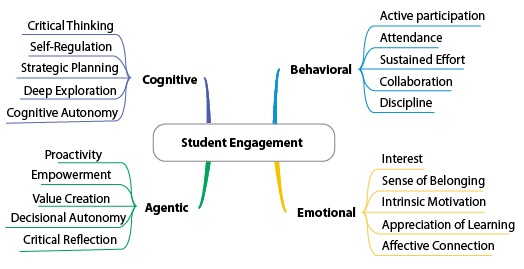
Figure 1: Engagement and its Dimensions
Source: Adapted from Fredricks et al. (2004); Reeve & Tseng (2011); Reeve (2013).
Figure 1 presents the dimensions of student engagement. Firstly, behavioral engagement refers to students’ active participation in academic activities, such as class attendance, task completion, and group collaboration. According to Fredricks et al. (2004), this dimension is essential to prevent school dropout, as active students tend to be more involved in the educational environment. Within the FCA framework, Gu et al. (2022) contend that the Flipped Classroom methodology enhances this form of engagement by prioritizing collaborative dynamics during face-to-face classes. Furthermore, Lo and Hew (2020) demonstrate that, when combined with gamification elements, the Flipped Classroom increases students’ motivation, fostering greater participation—especially in subjects like mathematics, where interactivity facilitates the understanding of complex concepts (Çevikbaş & Kaiser, 2022).
Secondly, cognitive engagement encompasses the mental effort devoted to a deep understanding of concepts and solving problems. Fredricks et al. (2004) state that this dimension involves processes such as critical thinking, self-regulation, and question formulation. From this perspective, the Flipped Classroom has been shown to be effective by freeing up in-class time for practical applications and in-depth discussions (Çevikbaş & Kaiser, 2022). Thus, cognitively engaged students demonstrate a greater capacity for strategic planning, progress monitoring, and adjustment of strategies to achieve their goals, even when faced with challenges (Reeve & Tseng, 2011; Reeve, 2013; Lo & Hew, 2021).
On the other hand, emotional engagement refers to students’ affective reactions, such as enthusiasm, satisfaction, and reduced anxiety (Fredricks et al., 2004). In this regard, Steen-Utheim and Foldnes (2018) highlight that the Flipped Classroom contributes to creating a safe and motivating environment where students feel more confident to interact and participate. Furthermore, Alebrahim and Ku (2020) found that this methodology increases emotional engagement due to class organization and interactivity, while Busebaia and John (2020) demonstrated that it enhances academic satisfaction and reduces dropout rates by fostering meaningful interactions between students and instructors.
Finally, agentic engagement represents an innovative dimension focused on students’ active and constructive participation in the teaching-learning process. Unlike the other dimensions, it values students’ capacity to intentionally shape the flow of the instruction, contributing to a more meaningful learning environment. Such contributions include suggesting improvements, asking relevant questions, expressing opinions, and adapting learning to their needs and interests. Based on self-determination theory, which considers autonomy, competence, and social relatedness as pillars of intrinsic motivation, agentic engagement fosters an enriching educational experience aligned with students’ needs (Reeve & Tseng, 2011; Reeve, 2013; Mameli & Passini, 2019).
Methodology and materials
This research employed a qualitative approach. The methodology was structured in two stages: data collection and qualitative analysis, which are detailed in the following subsections.
Data collection, Participant Profile, and Methodological Framework
A total of twenty-eight students enrolled in the Numerical Analysis course during the first academic semester of 2024 participated in the study. The class included students from different degree programs: seven from Energy Engineering, seven from Chemical Engineering, six from Mathematics Teaching, five from Production Engineering, and three from Food Engineering, all identified as A1 to A28. The Flipped Classroom methodology was applied throughout the entire semester. Figure 2 illustrates the methodological framework used during the semester.
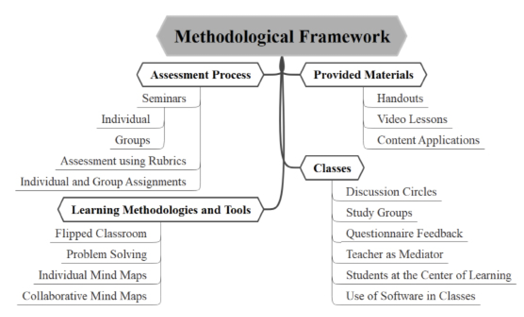
Figure 2: Methodological Framework of the Course
Source: Authors
Figure 2 illustrates the methodological framework adopted in the course throughout the semester. The course was structured based on the Flipped Classroom methodology, combining activities such as individual and collaborative mind maps, problem-solving, seminars, and rubric-based assessments. Classes were organized so that students accessed the content beforehand through video lectures and handouts, allowing classroom time to be devoted to discussion, practical application of concepts, and group problem-solving. The instructor acted as a facilitator, encouraging collaboration and knowledge exchange among students. This model aimed not only to facilitate content comprehension but also to strengthen student engagement across its cognitive, behavioral, emotional, and agentic dimensions.
In the pre-class phase, study materials were provided for students to prepare in advance by creating concept maps. After this preliminary study, students completed self-assessment questionnaires (Google Forms) and submitted their concept maps. The instructor analyzed their performance and organized the class accordingly. During class, students engaged in collaborative activities, including the construction of group concept maps, application of knowledge, presentations, and problem-solving. The instructor provided continuous feedback, and students reflected on the learning process, fostering the formalization of concepts. In the post-class phase, students revised their concept maps based on feedback and applied the studied concepts, reinforcing the learning cycle. This structure integrates active learning strategies, promoting greater engagement and deeper understanding of the content.
Data collection took place through observations conducted by the instructor-researcher during classes, and at the end of the semester, students completed an evaluative questionnaire designed and administered via Google Forms to gather qualitative data. The instrument was administered specifically during the final week of the academic semester, after students had fully experienced the pedagogical cycle structured around the Flipped Classroom model and its associated instructional strategies, allowing participants to provide a reflective and comprehensive evaluation of the formative experience. To ensure the ethical use of the data, all participants were invited to read, consent to, and sign the Informed Consent Form (ICF), which was also made available through the same platform. This approach ensured practicality in data collection while maintaining compliance with ethical research standards. Considering the researcher’s dual role as the course instructor, procedural measures were adopted to minimize potential influences related to social desirability and the power dynamics inherent in the educational context. In this regard, the anonymity of responses, voluntary participation, and the use of systematic textual analysis procedures were ensured, aiming to strengthen the interpretative consistency of the results.
Qualitative Data Analysis
According to Creswell (2010, p. 211), “qualitative research is an interpretative inquiry, with the researcher typically engaged in a sustained and intensive experience with the participants.” The qualitative phase of this study involved an open-ended question — administered via Google Forms at the end of the semester — “In what ways did the experience with the flipped classroom methodology, combined with learning tools (problem-solving, individual and collaborative mind maps), the evaluation process (seminars, individual and group assignments), and the provided materials (handouts, video lessons, and content applications) impact your engagement as a student? Please evaluate and describe your perceptions, highlighting positive aspects, challenges faced, and changes in your behavioral, agentic, emotional, and cognitive engagement throughout the semester.”
To assist in the analysis of qualitative data, the software Interface de R pour les Analyses Multidimensionnelles de Textes et de Questionnaires (IRaMuTeQ) was used, which is recognized for its capacity to explore the structure and organization of discourses. This tool allows the identification of relationships among the lexical worlds most frequently mentioned by the participants (Camargo & Justo, 2013). Among the methods employed, the following stood out:
- Similarity analysis is a technique based on graph theory used to identify and graphically represent relationships between words in a textual corpus.
The most connected and central terms in the graph reflect the thematic cores of the text, allowing the identification of patterns and semantic structures. This technique is useful for revealing associations of meaning and for understanding the organization of ideas in a set of textual data;
- Descending Hierarchical Classification (DHC), which allowed the identification of a dendrogram with emerging classes. In this process, the higher the χ² value, the more associated the word is with the identified class, with words considered significant when χ² > 3.80 and p < 0.05 (Lahlou, 2012).
Results and discussion
This section presents the qualitative results of this study, organized in accordance with the adopted methodological approach, and accompanied by discussion.
Reflections Based on the Qualitative Dimension of the Research
The first analysis was conducted using data obtained from the questionnaire completed by students at the end of the semester (related to the question in Section 3.2), collected through a digital form structured around a single open-ended reflective question, in which participants were instructed to provide discursive responses with an approximate length of six to eight lines, considering the methodological structure adopted throughout the term—including mind maps (individual and collaborative), group work, seminars, rubric-based assessments, and the provided materials (handouts, video lectures, and content applications), as presented in Figure 2. For this analysis, similarity analysis was chosen, as it allows for the identification and visualization of the connections between the most frequently used terms by the students, revealing patterns of association among them. The qualitative analytical process was conducted by the principal researcher through in-depth reading and iterative interpretation of the textual corpus, aiming to ensure interpretative consistency and analytical rigor. Figure 3 presents the results of this analysis, conducted with the aid of the IRaMuTeQ software, which generates a graph in which the most central terms and the strongest connections reflect the main themes addressed by the students, enabling a clear interpretation of the semantic structure of the analyzed corpus.
Figure 3: Similarity Analysis of the Qualitative Data
Source: Research Data
Figure 3 presents the similarity analysis, which makes it possible to identify the connections among the most recurrent terms in students’ reports, revealing patterns of association and central thematic cores, analyzed in light of the dimensions of student engagement. Cognitive engagement refers to the degree of students’ intellectual investment in the processes of comprehension, conceptual elaboration, and application of academic content, especially in disciplines that require abstract mathematical reasoning, such as Numerical Analysis. In the similarity graph, this dimension is evidenced by the recurrence and centrality of terms such as understand, content, concept, solve, exercise, problem, numerical, and calculus, which indicated an engagement oriented toward deep conceptual understanding and the systematic resolution of problems.
Students’ responses indicated that prior preparation, a structuring element of the Flipped Classroom methodology, was decisive for understanding the content developed in class. One respondent stated that “Going to class already knowing what is being discussed helps a lot with engagement” (A5). This excerpt shows that early contact with the content favored the activation of prior knowledge, allowing face-to-face time to be directed toward application, problem-solving, and conceptual discussion. Another student reinforced this aspect by highlighting the role of cognitive organization provided by instructional resources: “Mind maps helped a lot to better understand the content and connect the concepts” (A11).
Cognitive engagement also manifested itself significantly in collaborative activities, particularly when students assumed the role of knowledge mediators. In this regard, one participant pointed out that “When we explain to a classmate, we end up understanding the content better” (A2). This perception was emblematically synthesized by another respondent, who stated that “Those who teach learn twice” (A8), indicating that the process of making reasoning explicit contributed to the consolidation of learning.
In addition, students recognized that cognitive engagement involves intellectual effort, facing difficulties, and gradual progression in learning. One report highlighted this process by stating that “At the beginning, I had a lot of difficulty with some methods, but with the exercises and explanations I gradually managed to understand better” (A13). Another participant reinforced this perspective by noting that “Problem-solving activities required a lot of reasoning, but they helped a lot in learning” (A21).
These excerpts indicate that cognitive engagement is not limited to the passive assimilation of content but involves persistence, deliberate practice, and continuous reconstruction of knowledge. Thus, the data suggest that the Flipped Classroom, combined with collaborative problem-solving and the use of mind maps, fostered students’ cognitive engagement. The analysis shows that this engagement was enhanced by collaborative work in problem-solving, as expressed by one participant: “The teacher proposed more challenging exercises that forced us to seek different strategies to solve the problems” (A17). Furthermore, the term “classmate” appeared semantically connected to “learning” and “explaining,” indicating that peer interaction played a central role in the development of conceptual understanding, as reported by another student: “During the activities, I felt more confident because I had discussed the content with my classmates in groups” (A3). These findings converge with Gu et al. (2022), who emphasize that prior preparation and participation in collaborative activities promote critical reflection and deeper understanding of academic content.
Behavioral engagement refers to the observable actions of students in the learning process, such as participation in activities, involvement in assigned tasks, attendance, compliance with deadlines, and collaboration in group dynamics. In the similarity graph, this dimension is evidenced by the strong recurrence and interconnection of terms such as class, participate, activity, group, work, assignment, seminar, study, and discussion, which indicate active and continuous involvement in the pedagogical practices proposed throughout the semester.
Students’ statements reveal that the Flipped Classroom promoted a consistent pattern of participation over the academic term. One respondent stated that “I actively participated in classroom activities and group work” (A1). Another student reinforced the regularity of engagement in the proposed tasks by reporting that “I completed all the activities requested during the semester” (A6), demonstrating commitment to the established pedagogical demands.
Group work emerges as a central element for behavioral engagement, as it stimulates interaction, shared responsibility, and active participation. In this regard, one participant highlighted that “When we work in groups, everyone ends up participating more” (A14). Moreover, seminars and debates were mentioned as key spaces for active participation, as they require prior preparation and student positioning, as expressed in the following statement: “In the seminars, I needed to prepare better in order to participate in the discussion” (A9).
Even among students who report lower levels of verbal participation, effective involvement in practical activities was observed, as evidenced by the excerpt: “I do not talk much in class, but I always participated by doing the activities and submitting the assignments” (A18). Another respondent directly associated the methodology with a change in classroom behavior by stating that “With the flipped classroom, I felt more active during classes, not just watching” (A22), indicating a transition from a more passive attitude to a more engaged form of participation.
These reports indicated that behavioral engagement was sustained by a methodological structure that required continuous participation, prior preparation, and involvement in collaborative activities. Thus, the data demonstrated that the Flipped Classroom fostered behavioral engagement, characterized by active participation, systematic completion of tasks, and the effective presence of students in the proposed activities throughout the semester. In line with these findings, Lo and Hew (2020) show that group work and the exchange of ideas during discussions in flipped classrooms promote more active behaviors and contribute to better content retention. In line with this, the recurrence of the term discussion, semantically connected to group and work, indicated that the Flipped Classroom format stimulated the exchange of ideas and active classroom behavior, as evidenced by the statement: “The flipped classroom made us discuss more in groups, and this made learning more interesting” (A14).
Emotional engagement refers to students’ affective reactions to learning experiences, including feelings of motivation, interest, enthusiasm, confidence, anxiety, or demotivation. In the similarity graph, this dimension was evidenced by lexical clusters associated with terms such as feel, motivation, motivate, feedback, confidence, encourage, demotivation, and environment, indicating that emotional aspects played a central role in the experience of the Flipped Classroom.
Students’ statements reveal that the adopted methodology fostered predominantly positive affective responses toward the learning process. One respondent stated that “I felt much more motivated to study when the classes were more participatory” (A5). Another student highlighted the emotional impact of collaborative activities by reporting that “Working in groups made the class lighter and less tiring” (A12). Peer support emerged as a fundamental element in strengthening emotional engagement, as expressed by one participant: “When one classmate helps another, it makes you more willing to keep studying” (A17).
Teacher mediation also proved to be decisive in building an emotionally supportive learning environment. In this regard, one student reported that “The teacher always encouraged us and provided feedback, which made me feel more confident to learn” (A4). Another respondent reinforced the importance of feedback in strengthening academic confidence by stating that “The feedback helped me understand where I was making mistakes, and this made me feel more confident” (A10), highlighting the role of formative feedback in students’ emotional support.
However, the data also revealed emotional fluctuations, evidencing the complexity of this dimension. One student reported that “At some moments I felt demotivated due to a lack of time to study” (A13). This excerpt demonstrated that emotional engagement does not present itself homogeneously, but rather as a dynamic process sensitive to students’ personal and contextual conditions. Even so, the predominance of positive reports indicated that the Flipped Classroom, by promoting interaction, mutual support, and continuous teacher mediation, contributed to emotional engagement characterized by higher motivation, confidence, and a sense of belonging to the learning process.
Thus, it became evident that the emotional support provided by peers and teachers contributed to creating a psychologically safe environment, strengthening students’ motivation and interest and promoting emotional engagement (Reeve & Tseng, 2011). The strong semantic connection between the terms “classmate” and “interact” suggested that emotional engagement was reinforced by peer support and motivation, as illustrated in the following statement: “During the presentation of the assignments, the entire group was involved and motivated. Collaboration was essential for us to feel safe and confident” (A9).
Additionally, teacher support and guidance throughout the learning process contributed to strengthening agentic engagement, as they stimulated students’ autonomy and expanded their freedom to propose, test, and adjust solutions (Çevikbaş & Kaiser, 2022). This aspect was evidenced by one participant’s report: “I felt welcomed when the teacher adjusted the activity according to our feedback. This gave me more confidence to participate in the next activities” (A11). Constructive feedback and the emotional support provided by the teacher reinforced students’ sense of belonging and motivation, contributing significantly to the strengthening of emotional engagement (Gu et al., 2022).
Agentic engagement refers to students’ capacity to act intentionally, autonomously, and proactively in the learning process, influencing the learning process, expressing ideas, proposing strategies, and assuming responsibility for their own learning trajectories. In the similarity graph, this dimension was evidenced by the recurrence and interconnection of terms such as contribute, apply, propose, idea, autonomy, exchange, learn, and collaborative, which indicate that students moved beyond a predominantly reactive stance and assumed an active role in constructing knowledge.
Students’ statements revealed that the Flipped Classroom fostered the development of a sense of responsibility and academic agency. One respondent stated that “I felt more responsible for my learning because I needed to prepare before class” (A15). Another student highlighted autonomy in decision-making during activities by reporting that “We had the freedom to choose how to solve the problems, and this made me participate more” (A7). The possibility of expressing ideas and proposing solutions emerged as a central element of agentic engagement, as evidenced by the following statement: “We could share our opinions and suggest different ways to solve the activities” (A19).
In addition, students recognized that their actions exerted a direct influence on the development of classes, indicating a more horizontal relationship within the pedagogical process. In this regard, one participant stated that “The teacher listened to our suggestions, and some changes happened as a result” (A5). Another respondent reinforced this perception of impact by highlighting that “I felt that my participation really made a difference in class” (A21), which evidenced the recognition of the student as an active subject in the educational process.
These reports demonstrated that students did not limit themselves to executing the proposed tasks but acted as agents of their own learning process by regulating their actions, making decisions, and influencing the pedagogical environment. Thus, the data indicated that the Flipped Classroom fostered agentic engagement, characterized by autonomy, initiative, shared responsibility, and the capacity for conscious intervention in the educational process, in line with the findings of Steen-Utheim and Foldnes (2018).
The second analysis conducted on the qualitative data from the open-ended question (referenced in item 3.2) employed the IRaMuTeQ software with Descending Hierarchical Classification (DHC). According to Martins et al. (2022) and Magno and Gonçalves (2023), this method closely resembles Discursive Textual Analysis (DTA). It is important to emphasize that DHC analyses require a minimum retention of 75% of text segments to be effective for classifying any textual material (Camargo & Justo, 2013 and 2016).
The textual corpus consisted of twenty-eight texts corresponding to the responses to the open-ended question. After analysis using IRaMuTeQ, the corpus was divided into 115 text segments (TS), with 95 segments (84%) retained. A total of 4,114 occurrences (words, forms, or lexemes) emerged, comprising 1,096 distinct words, of which 650 appeared only once.
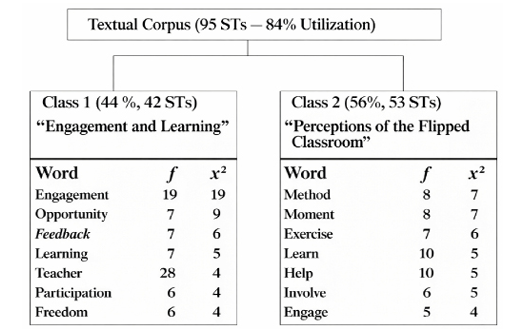
Figure 4: Dendrogram of the CHD classes
Source: Research data
Figure 4 represents the two main classes identified: “Engagements” and “Perceptions of the Flipped Classroom.” Each class groups words associated with their respective themes, listed according to their frequency (f) and χ² value, indicating the strength of association between the words and the categories (Lahlou, 2012).
Class 1 reflects how the FCA directly impacted student engagement and learning. Elements such as “engagement,” “opportunity,” “feedback,” and “freedom” indicate that students perceived the methodology as promoting active and reflective participation. As highlighted by Fredricks et al. (2004), engagement comprises emotional, behavioral, and cognitive dimensions. This perspective is evident in responses such as: “I tried to be as participative as possible, as well as complete all the activities proposed during the semester [...] both the doubt-solving sessions and the activities were very good” (A1). Here, emotional and behavioral engagement is notable, especially through the appreciation of the professor’s constant feedback.
Additionally, the central role of the professor appears in responses such as: “The professor was always concerned with the impact of their teaching, and this is of utmost importance to us students” (A2). Reeve and Tseng (2011) support this view by highlighting that student autonomy and motivation are strengthened when the professor acts as an active mediator, fostering a collaborative learning environment. Another relevant point is the impact of feedback on the construction of learning, mentioned in: “During the semester, I had several opportunities to express my opinions and suggestions [...] the professor welcomed my suggestions positively, implementing some of the changes in subsequent activities” (A5). This reinforces Fredricks et al. (2004) idea that emotional engagement is strengthened when students feel their contributions are valued.
Pedagogical practices that include collaborative activities, challenging yet accessible tasks, and continuous feedback are effective in encouraging behavioral engagement (Steen-Utheim & Foldnes, 2018). For example, the use of methods such as the Flipped Classroom provides more opportunities for students to actively participate in debates, group projects, and problem-solving, reinforcing their presence in the classroom (Çevikbaş & Kaiser, 2022; Gu et al., 2022). Pedagogical practices involving collaborative tasks and accessible challenges are effective in strengthening behavioral engagement (Steen-Utheim & Foldnes, 2018). The use of FCA provides more opportunities for students to actively engage in discussions and problem-solving, promoting more meaningful learning (Çevikbaş & Kaiser, 2022).
Emotional engagement also plays a crucial role in learning, as it is directly related to students’ interest, enthusiasm, and affective connection. Fredricks et al. (2004) associate this dimension with intrinsic motivation and a sense of belonging. For example: “I really liked how the professor gave us freedom to participate and share our opinions; I felt more motivated to learn” (A3). This perception reflects the impact of an emotionally supportive environment, which, according to Reeve and Tseng (2011), strengthens students’ confidence and enthusiasm. The students’ statements reinforce the idea that emotional engagement was promoted by the adopted methodology:
A20: Despite feeling emotionally tired due to daily tasks, my motivation is to seek knowledge.
A15: I felt motivated to participate in classes. The environment becomes much more welcoming.
A9: During group discussions and feedback sessions, I had the opportunity to express my opinions and doubts.
(Excerpts from students’ responses)
Cognitive engagement promotes meaningful and lasting learning, enabling students to develop connections between concepts and transferable skills applicable to different academic and professional contexts (Fredricks et al., 2004). The Flipped Classroom encourages practices such as critical analysis, synthesis, and practical application, as highlighted in the students’ statements:
A5: The combination of theory and practice in problem-solving motivated me greatly, as I could directly see the application of the concepts.
A3: I felt prepared for the classes; I really felt that the concepts and their application were well aligned.
A17: This helped a lot in learning, especially when applying knowledge to everyday situations.
A10: It helped me better organize my doubts, always bringing well-prepared questions to class.
(Excerpts from students’ responses)
These examples reflect how the methodology promoted the use of learning strategies, helping students handle complex problems and develop autonomy (Reeve & Tseng, 2011). Agentic engagement involves students’ active participation in defining learning goals and methods (Reeve, 2013; Mameli & Passini, 2019). In this context, the use of problem-solving was found to be associated with increased student engagement, as it fostered more participatory classes, encouraged students’ active involvement in developing solutions, and enhanced cognitive engagement with mathematical content (Blass et al., 2025). This dimension was strengthened through strategies that allowed students to express opinions and suggest improvements, as evidenced in the responses:
A3: The professor always made it clear that I could verbalize my questions at any time.
A4: The Flipped Classroom method encourages me to stay active and motivated throughout the semester.
A21: I had several opportunities to express my opinions during the surveys. The professor was receptive and implemented some of the suggestions.
A26: The flipped class provided me with more and better interaction with the professor.
A22: Certainly, whether during classes with the professor asking if we had questions or afterward clarifying our doubts.
(Excerpts from students’ responses)
Mameli and Passini (2019) highlight that agentic engagement requires students to take responsibility for their learning, while Reeve and Tseng (2011) suggest that autonomy should be developed gradually to maximize its effects.
Class 2 reveals how students perceived the impact of the FCA in terms of method, collaboration, and practical application. Words such as “method,” “help,” and “learn” emphasize the role of flipped teaching in promoting active and collaborative learning. One of the most valued features by students was prior preparation, as described: “By studying the content beforehand through videos and readings, students arrive at class better prepared and more motivated to actively participate in discussions and proposed activities” (A10). This statement reflects the findings of Çevikbaş and Kaiser (2022), who point out how the FCA transforms class time into a space for practical and interactive activities.
The impact of collaboration is also evident in responses such as: “By studying the material in advance, they participate more actively in group discussions and in-class activities, which strengthens collaboration and mutual learning” (A8). According to Lo and Hew (2021), this exchange of ideas and interaction among students is essential for knowledge construction in an active model.
Another highlighted aspect was the motivation generated by the method, as described in: “Group work engages the student and captures their attention [...] it makes us want to understand the subject better” (A2). These results align with the findings of Steen-Utheim and Foldnes (2018), who emphasize the role of active methodologies in increasing students’ interest and retention of concepts.
Group activities were mentioned as precursors to engagement, highlighting interaction and the collective construction of learning. Examples of this are found in the following student responses:
A2: In the case of group work, the Flipped Classroom creates a collaborative environment, since all students have prior contact with the material and can dedicate class time to solving questions and applying the learned concepts.
A12: During group work, the extra incentive to help others assists in studying.
A19: In group studies, we gather and clear each other’s doubts with our peers.
A24: Explaining concepts to others during debates was a valuable learning experience.
A13: Group discussions were fundamental for consolidating the understanding of the more difficult topics.
A2: Group work engages the student and captures their attention, and it makes me much more involved, as exemplified by our last project.
A18: By studying the material beforehand, I was able to collaborate better with my classmates during discussions and activities.
(Excerpts from student responses)
These examples reinforce the importance of collaborative activities in promoting participatory learning. Despite the positive outcomes, some challenges were mentioned. Some students reported initial difficulties with the flipped format: “At first, it was confusing to know what to study beforehand and how it would be used in class” (A9). This difficulty points to the need for a gradual introduction to the method, as suggested by Çevikbaş and Kaiser (2022). Furthermore, not all students participated equally in group activities, as highlighted: “Some classmates get less involved, which overloads those who want to participate” (A11). These challenges indicate the importance of strategies to balance group responsibilities, as well as providing initial support and structured feedback, as emphasized by Steen-Utheim and Foldnes (2018).
Thus, it can be observed that the two classes reveal complementary aspects of the methodology’s impact: while Class 1 highlights the strengthening of the bond with the teacher and the direct effect on engagement, Class 2 demonstrates how the dynamics of the Flipped Classroom and the use of active strategies were perceived by students as key factors for improving understanding and participation in the classroom.
Unlike previous studies (Fredricks et al., 2004; Reeve & Tseng, 2011; Çevikbaş & Kaiser, 2022), which pointed to the overall positive impact of the Flipped Classroom on academic engagement, this study highlights that the structured combination of concept maps, seminars, and problem-solving significantly strengthened agentic engagement, fostering student autonomy and responsibility in the learning process. In this sense, the results show that the collaborative construction of mind maps plays an important role in promoting active learning environments, because it encourages meaningful interaction among peers, collaborative problem-solving, and the co-construction of knowledge (Blass & Rhoden, 2024). The distinctive feature of this approach lies in the dynamic interaction among these strategies, which allowed students not only to better understand the content but also to actively participate in knowledge construction. Furthermore, the professor’s active role as a facilitator, combined with the encouragement of group collaboration, established a psychologically safe environment, enhancing motivation and reinforcing emotional engagement. These results indicate that the intentional combination of these methodologies creates a cycle of participatory and self-regulated learning, promoting greater student involvement.
In this case, group problem-solving strengthened critical thinking and conceptual understanding (cognitive dimension), while constant interaction with peers and support from the instructor created a psychologically safe environment, increasing motivation and a sense of belonging (emotional dimension). The presence of collaborative and assessment activities based on seminars fostered autonomy and responsibility for learning (agentic dimension), as students were encouraged to propose solutions and actively contribute to the teaching-learning process. The continuous effort to solve problems and discuss solutions, combined with teamwork, reflected more active and participatory academic behavior (behavioral dimension). These findings demonstrate that the specific combination of these strategies within a Numerical Analysis teaching context offers a significant and distinctive impact on student engagement, addressing methodological issues previously identified in the researcher’s earlier experiences.
Conclusion
The results of this study demonstrate that the strategic combination of the Flipped Classroom Approach (FCA) with the use of mind maps, seminars, and problem-solving activities within a Numerical Analysis context had a direct and significant impact on strengthening the four dimensions of academic engagement (cognitive, behavioral, emotional, and agentic). This integrated approach not only promoted a deeper understanding of mathematical content but also stimulated active participation, motivation, and a sense of autonomy among the students. The originality of this research lies in the interaction between these methodological strategies, which created a dynamic learning cycle: the prior preparation through mind maps strengthened confidence in participating in seminars and discussing solutions, while group work and instructor encouragement consolidated student involvement and self-regulation throughout the semester.
Furthermore, qualitative reports reinforced the positive impact of practical activities and continuous feedback, which were perceived as essential for fostering reflective and collaborative learning. Students highlighted the transformative role of the FCA in bridging theoretical concepts with practical applications, consolidating students’ active role in the learning process.
However, some limitations should be considered, such as the sample size, consisting of twenty-eight students, and the fact that the study was conducted in a single institution, which restricts the generalizability of the findings. Future research could expand the sample and include different educational contexts. These findings reinforce the potential of the combined strategies used with the FCA as a strategic tool to enhance student engagement in higher education, with the possibility of replication in other educational contexts and disciplines that demand higher engagement and conceptual abstraction.
Conflict of Interest Statement
The authors declare that there are no conflicts of interest of a personal, commercial, political, academic, or financial nature that may have influenced the results, analyses, or interpretations presented in this manuscript. They further declare that they hold no personal or financial relationships with individuals or institutions that could be construed as a potential conflict of interest in relation to the content of this work.
Author Contribution Statement
Leandro Blass: Conceptualization, Data curation, Formal analysis, Funding acquisition, Investigation, Methodology, Project administration, Resources, Software, Supervision, Validation, Visualization, Writing – original draft, Writing – review & editing. Angélica Cristina Rhoden: Conceptualization, Data curation, Formal analysis, Funding acquisition, Investigation, Methodology, Resources, Supervision, Validation, Visualization, Writing – original draft, Writing – review & editing.
Ethics Statement
This article is part of the research project entitled “Problem-solving, active methodologies, different forms of assessment and the use of technologies in higher education”, led by researcher Leandro Blass and conducted within the framework of the Fundação Universidade Federal do Pampa (UNIPAMPA). The study was submitted to the Research Ethics Committee and received approval under the Certificate of Presentation for Ethical Appraisal (CAAE) No. 60032222.8.0000.5323, version 3, submitted on 19 August 2022, with self-funding. All methodological procedures adopted complied with the ethical principles governing research with human participants, ensuring anonymity, confidentiality of information, voluntary participation, and the obtainment of informed consent, in accordance with applicable legislation and current ethical regulations.
Acknowledgements
This study is part of the research project “Metodologias ativas, resolução de problemas e ferramentas de aprendizagem: avaliação, tecnologias e práticas no ensino superior” and is linked to the research group GAMA – Grupo de Pesquisa sobre Aprendizagens, Metodologias e Avaliação.
References
Akçayır, G., & Akçayır, M. (2018). The Flipped Classroom: A Review of Its Advantages and Challenges. Computers & Education, 126, 334-345. https://doi.org/10.1016/j.compedu.2018.07.021
Alebrahim, F., & Ku, H. (2020). Perceptions of Student Engagement in the Flipped Classroom: A Case Study. Educational Media International, 57(2), 128-147. https://doi.org/10.1080/09523987.2020.1786776
Baig, M., & Yadegaridehkordi, E. (2023). Flipped Classroom in Higher Education: A Systematic Literature Review and Research Challenges. International Journal of Educational Technology in Higher Education, 20(1). https://doi.org/10.1186/s41239-023-00430-5
Bergmann, J., & Sams, A. (2012). Flip Your Classroom: Reach Every Student in Every Class Every Day. International Society for Technology in Education. https://tinyurl.com/azwar34v
Bishop, J., & Verleger, M. (2013). The Flipped Classroom: A Survey of the Research. Paper presented at 2013 ASEE Annual Conference & Exposition, Atlanta, United States. https://tinyurl.com/3rnhdh29
Blass, L., Duarte, V., & Rhoden, A. (2025). O método de resolução de problemas como estratégia didática para o ensino e aprendizagem em cálculo numérico. Revista Electrónica de Investigación en Educación en Ciencias, 20(1), 21-32. https://tinyurl.com/2s3r4ea2
Blass, L., & Hemann, S. (2025). Contribuições dos estudos sobre sala de aula invertida no ensino superior. Revista Educar Mais, 9. https://doi.org/10.15536/reducarmais.9.2025.4197.
Blass, L., & Junqueira, S. (2025). Sala de aula invertida: Aprendizagem ativa e colaborativa no ensino superior. EccoS. Revista Científica, 74. https://doi.org/10. 5585/2025.28523.
Blass, L., & Rhoden, A. (2024). A eficácia dos mapas mentais colaborativos na aprendizagem e ensino de tecnologias aplicadas à Matemática. Revista Educação & Formação, 9. https://doi.org/10.25053/redufor.v9.e13292.
Blass, L., Rhoden, A., & Pereira, P. (2024). Sala de aula invertida: Análise das percepções dos estudantes antes e depois de uma oficina prática. RIS. Revista Insignare Scientia, 7(2), 79-99. https://doi.org/10.36661/2595-4520.2024v7n2.13959.
Busebaia, T., & John, B. (2020). Can Flipped Classroom Enhance Class Engagement and Academic Performance among Undergraduate Pediatric Nursing Students? A Mixed-Methods Study. Research and Practice in Technology Enhanced Learning, 15. https://n9.cl/bwvbwm
Buzan, T. (2005). The Ultimate Book of Mind Maps: Unlock Your Creativity, Boost Your Memory, Change Your Life. Thorsons. https://tinyurl.com/2n5fjf8w
Camargo, B., & Justo, A. (2013). IRaMuTeQ: Um software gratuito para análise de dados textuais. Temas em Psicologia, 21(2), 513-518. https://tinyurl.com/234he26n
Camargo, B., & Justo, A. (2016). Tutorial para uso do software de análise textual IRaMuTeQ. Mackenzie. https://tinyurl.com/2s3b23e4
Çevikbaş, M., & Kaiser, G. (2022). Student Engagement in a Flipped Secondary Mathematics Classroom. International Journal of Science and Mathematics Education, 20(7), 1455-1480. https://doi.org/10.1007/s10763-021-10213-x
Creswell, J. (2010). Research Design: Qualitative, Quantitative, and Mixed Methods Approaches. Sage. https://tinyurl.com/3uc4y78a
Debbağ, M., & Yildiz, S. (2021). Effect of the Flipped Classroom Model on Academic Achievement and Motivation in Teacher Education. Education and Information Technologies, 26(3), 3057-3076. https://doi.org/10.1007/s10639-020-10395-x
Fredricks, J., Blumenfeld, P., & Paris, A. (2004). School Engagement: Potential of the Concept, State of the Evidence. Review of Educational Research, 74(1), 59-109. https://doi.org/10.3102/00346543074001059
Gil, A. (2002). Como elaborar projetos de pesquisa. Atlas. https://tinyurl.com/ycxb5npd
Gonçalves, B., & Aguiar, J. (2024). Um estudo sobre o engajamento e os resultados de aprendizagem de alunos ingressantes do curso de química no contexto do ensino remoto emergencial. Ensaio Pesquisa em Educação em Ciências, 26. https://tinyurl.com/4khuwf7w
Gu, J., Tang, L., Lui, X., & Xu, J. (2022). Promoting Pre-Service Teacher Students’ Learning Engagement: Design-Based Research in a Flipped Classroom. Frontiers in Psychology, 13. https://doi.org/10.3389/fpsyg.2022. 810275
Lahlou, S. (2012). Text Mining Methods: An Answer to Chartier and Meunier. Papers on Social Representations, 20(38). https://tinyurl.com/bdebuwye
Lo, C., & Hew, K. (2020). A Comparison of Flipped Learning with Gamification, Traditional Learning, and Online Independent Study: The Effects on Students’ Mathematics Achievement and Cognitive Engagement. Interactive Learning Environments, 28(4), 464-481. https://doi.org/10.1080/10494820.2018.1541910
Lo, C., & Hew, K. (2021). Student Engagement in Mathematics Flipped Classrooms: Implications of Journal Publications from 2011 to 2020. Frontiers in Psychology, 12. https://doi.org/10.3389/fpsyg.2021.672610
Magno, C., & Gonçalves, T. (2023). O testemunho em pesquisa narrativa e a análise textual discursiva associada ao IRaMuTeQ. Amazônia. Revista de Educação em Ciências e Matemáticas, 19(42), 18-34. https://tinyurl.com/r2tb9spm
Mameli, C., & Passini, S. (2019). Development and Validation of an Enlarged Version of the Student Agentic Engagement Scale. Journal of Psychoeducational Assessment, 37(4), 450-463. https://doi.org/10.1177/ 0734282918757849
Martins, K., De Paula, M., Gomes, L., & Dos Santos, J. (2022). O software IRaMuTeQ como recurso para a análise textual discursiva. Revista Pesquisa Qualitativa, 10(24), 213-232. https://doi.org/10.33361/RPQ.2022.v.10.n.24.383
Martins, L., & Ribeiro, J. (2017). Engajamento do estudante no ensino superior como indicador de avaliação. Avaliação. Revista da Avaliação da Educação Superior, 22(1), 223-247. https://doi.org/10.1590/s1414-40772017000 100012
Pavanelo, E., & Lima, R. (2017). Sala de aula invertida: A análise de uma experiência na disciplina de cálculo I. Bolema, 31(58), 739-759. https://n9.cl/thr79
Reeve, J. (2013). How Students Create Motivationally Supportive Learning Environments for Themselves: The Concept of Agentic Engagement. Journal of Educational Psychology, 105(3), 579-595. https://doi.org/10.1037/a0032690
Reeve, J., & Tseng, C. (2011). Agency as a Fourth Aspect of Students’ Engagement during Learning Activities. Contemporary Educational Psychology, 36(4), 257-267. https://doi.org/10.1016/j.cedpsych.2011.05.002
Schmitt, V., & Cequea, M. (2020). Aula invertida: Uma mudança nos paradigmas no ensino superior. Interciencia, 45(11), 501-507. https://tinyurl.com/bdt8mdvb
Spruijt, A., Leppink, J., Wolfhagen, I., Bok, H., Mainhard, T., Scherpbier, A., Van Beukelen, P., & Jaarsma, D. (2015). Factors Influencing Seminar Learning and Academic Achievement. Journal of Veterinary Medical Education, 42(3), 259 -270. https://doi.org/10.3138/jvme.1114-119R2
Steen-Utheim, A., & Foldnes, N. (2018). A Qualitative Investigation of Student Engagement in a Flipped Classroom. Teaching in Higher Education, 23(3), 307-324. https://doi.org/10.1080/13562517.2017.1379481
Van Alten, D., Phielix, C., Janssen, J., & Kester, L. (2019). Effects of Flipping the Classroom on Learning Outcomes and Satisfaction: A Meta-Analysis. Educational Research Review, 28. https://doi.org/10.1016/j.edurev.2019.05.003
Blass, L., & Rhoden, A. C. (2026). Flipped Classroom and Active Strategies: Students’ Perceptions of Engagement in Numerical Analysis. Revista Andina de Educación 9(1) 6155. Published under license CC BY-NC 4.0 

